
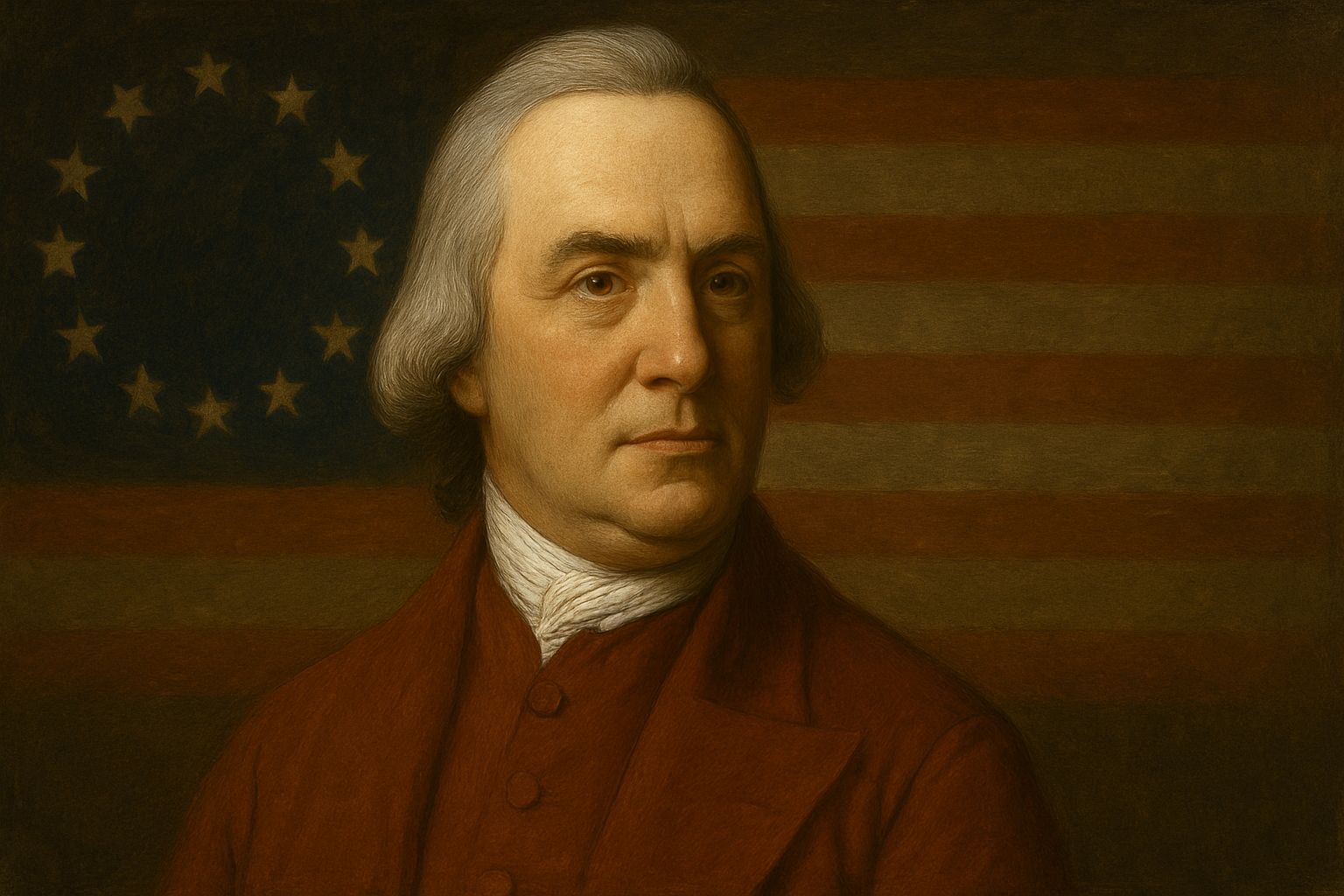
Celebrating the Birth of Samuel Adams: A Passionate Voice and Builder of Liberty
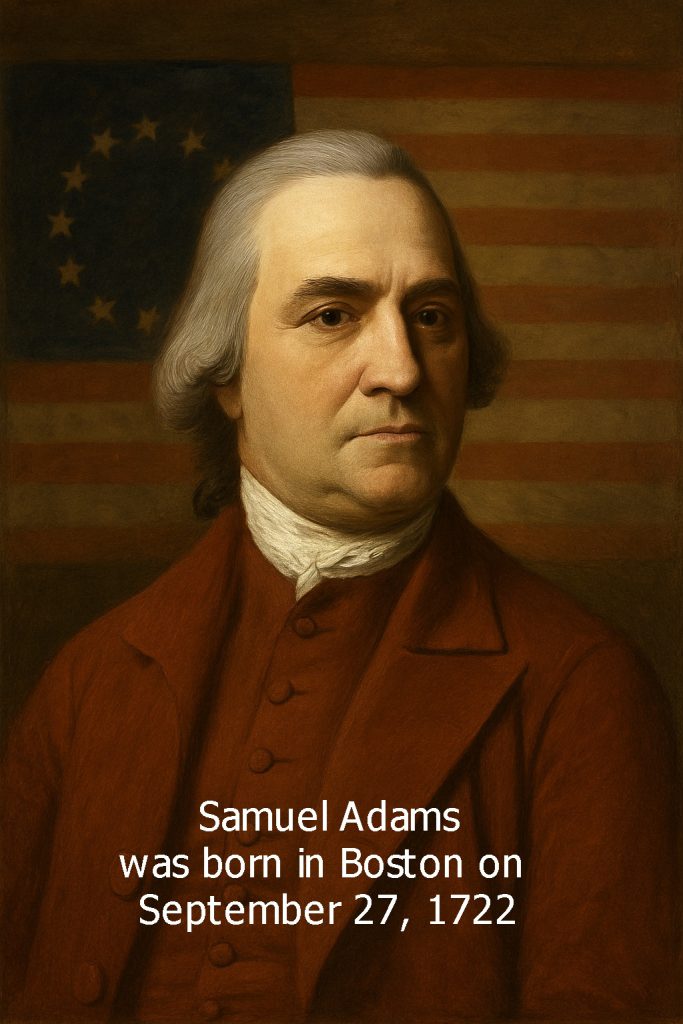
Every September 27, we remember the birth of a man whose life was a constant call for holding authority accountable to the people. Samuel Adams was born in Boston on September 27, 1722 and died in the same city on October 2, 1803.
Origins and Education
Samuel Adams was raised in a family with deep moral convictions and a strong sense of civic responsibility. His father, also named Samuel, was a merchant and congregational deacon actively involved in local politics and committed to defending the rights of Massachusetts residents against colonial abuses.
Adams studied at Harvard, where he became interested in the principles that would later guide his political activism. Though he briefly considered becoming a lawyer, it was his passion for politics and the defense of individual freedoms that brought him to the forefront of colonial discourse.
Although he attempted to engage in business, Adams had little success in commerce. He even worked as a tax collector in Boston, albeit with minimal attention to detail; his true talent lay not in numbers but in political mobilization.
He married Elizabeth Checkley in 1749 and had several children, though many did not survive infancy. After Elizabeth’s death, he remarried.

The Awakening of an Activist
By the 1760s, as the British Parliament began imposing heavier taxes on the colonies to cover war debts, Adams emerged as a clear and determined voice against taxation without representation. Among the policies he opposed:
- The Sugar Act (1764): Taxed essential goods like molasses. Adams denounced it as an infringement on colonial freedom.
- The Stamp Act (1765): Imposed fees on legal documents, newspapers, and diplomas. Adams helped organize public resistance.
- The Townshend Acts (1767): Taxed paper, tea, and paint. Adams rallied citizens and merchants to protest.
In 1772, Adams helped establish the Boston Committee of Correspondence, a network to connect colonial towns and share information about British policies. This structure proved critical in turning local grievances into a continental movement.
When the Tea Act of 1773 gave exclusive rights to the British East India Company, Adams encouraged the protest that led to the Boston Tea Party. While he didn’t throw the tea himself, he helped orchestrate the symbolic act.
Parliament’s reaction was harsh. It imposed the Coercive Acts (also known as the Intolerable Acts) on Massachusetts. Adams responded by helping to organize the First Continental Congress in 1774, where he pushed for colonial rights and, ultimately, independence.
Toward Independence
From 1774 to 1781, Adams was an active member of the Continental Congress, advocating for a break with Britain. He signed the Declaration of Independence in 1776 and contributed to the drafting of the Articles of Confederation.
When he returned to Massachusetts, he helped write the state’s constitution in 1780. Initially skeptical of the U.S. Constitution due to concerns over centralized power, Adams supported it after being promised a Bill of Rights.
State Leadership and Final Years
In his later years, Adams served in state government:
- Lieutenant Governor of Massachusetts (1789–1793) under John Hancock.
- Governor of Massachusetts (1794–1797) after Hancock’s death.
He retired from politics in 1797 and died in Boston in 1803. He was buried in Granary Burying Ground beside other Revolutionary figures.
His eulogies described him as a man who “spoke words of truth” and defended principles that came from the heart.
Legacy and Meaning
Samuel Adams was not a man who sought power for its own sake. He was an intelligent agitator, a patient builder of alliances and resistance networks. His great achievement was in turning scattered discontent into organized political will.
His legacy lives on not only in America’s founding documents but also in a civic culture that values transparency, accountability, and the idea that governments exist to serve—not rule—the people.
Today, as we honor his birthday, we remember not a perfect hero, but a human being who dedicated his intellect and energy to the belief that legitimate authority arises from the free consent of the governed. His life reminds us that liberty is not a privilege of a few, but a collective practice that demands vigilance, participation, and courage in the face of power.