
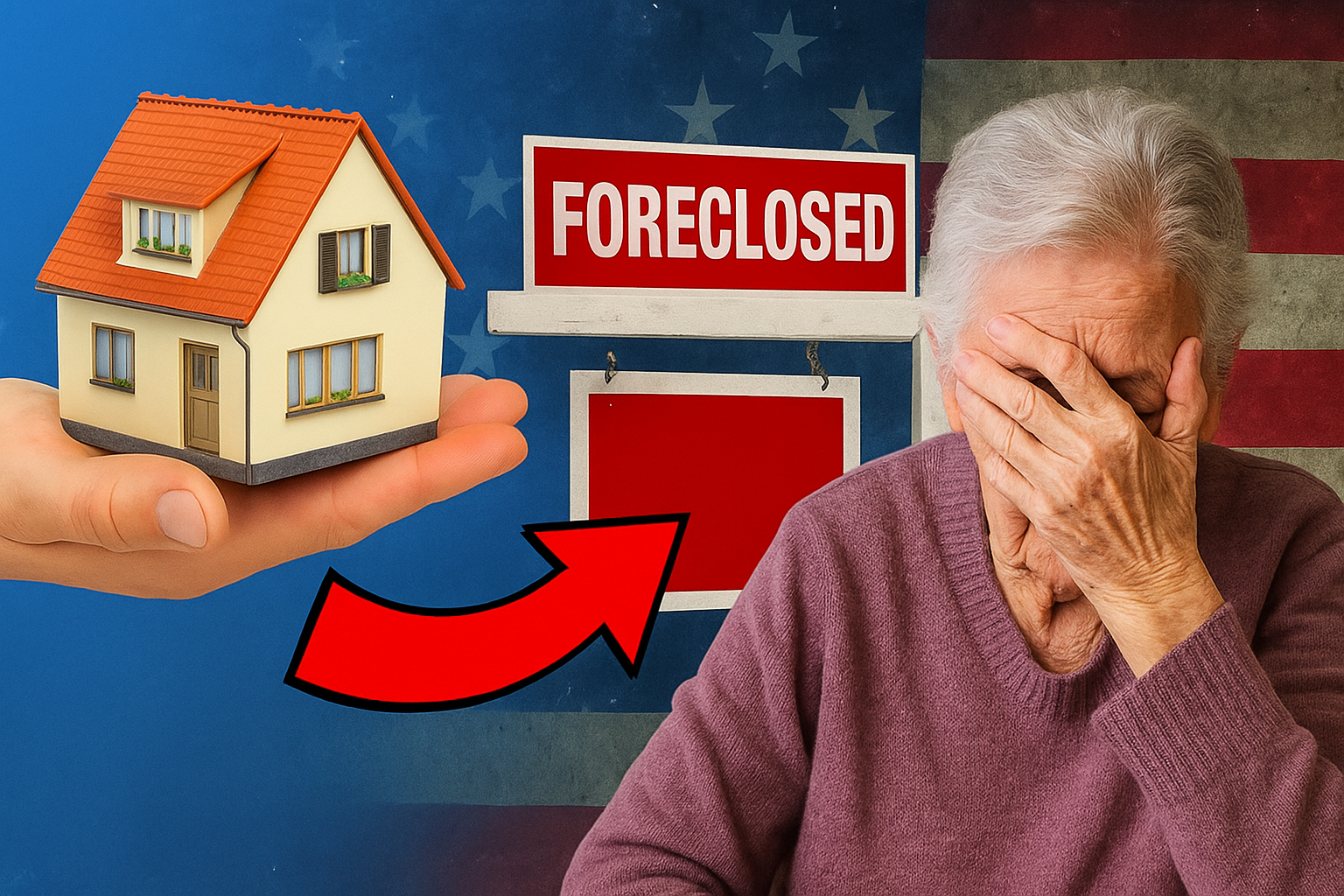
Why should property taxes be illegal in a system of freedom?
In the United States, and particularly in Florida, there is a debate that is rarely addressed head-on: can it be considered fair, or even legitimate, for a person who has already purchased a property to continue paying the state to maintain it? The so-called “property tax” has become one of the greatest contradictions in a country that claims to protect private property as a natural and fundamental right.
The Essential Contradiction: Conditional Ownership
The basic premise of property rights is that what a person acquires through their effort, investment, and responsibility belongs fully to them. The title deed should be the final document guaranteeing that ownership. However, in practice, a homeowner in Florida does not own their property outright: each year they must pay the local government a tax simply to maintain it in their name.
This means that if a homeowner fails to pay this tax, even if they have paid off their mortgage, even if they have invested a lifetime of work in their home, the state can seize and foreclose on their property. In other words, property never belongs fully to the citizen, but is perpetually mortgaged to the government. This is the central argument: private property should not depend on a renewable permit from the authority, because that makes it a grant and not a right.
A Brief Historical Overview
The property tax in Florida, as in many American states, has its historical roots in the British colonial system and the early fiscal needs of local governments. Its evolution is marked by specific laws that have shaped the current model, characterized by a blend of tax tradition and modern adaptations.
Colonial Origins and Early Laws
The concept of taxing property dates back to the colonial era, when the American colonies adopted tax systems based on the value of land and real estate. In Florida, following its incorporation as a U.S. territory in 1821 following the Adams-Onís Treaty, the federal government assigned local authorities the responsibility of funding essential services through property taxes.
The Florida Constitution of 1838, drafted before the territory became a state, already established the right of counties to collect property taxes to fund basic infrastructure, education, and public safety. This principle was cemented with Florida’s entry into the Union in 1845.
Florida Constitution of 1885: The Modern Legal Framework
The Florida Constitution of 1885 marked an important milestone by defining the property tax as a primary source of revenue for local governments. This charter established:
The requirement that counties and municipalities use property taxes as their funding base. The possibility of tax exemptions for certain groups is, although initially extremely limited.
This constitution also introduced the concept of “fair assessment,” which required tax values to reflect the actual market value of properties. However, for decades, this principle was difficult to implement due to the lack of standardized assessment mechanisms.
The Homestead Exemption (1933): Protection for Principal Residences
One of the most significant reforms came in 1933 with the introduction of the Homestead Exemption. This law, codified in Article VII of the Florida Constitution, allows property owners to reduce the assessed value of their principal residence by up to $50,000 ($25,000 additional for school taxes).
This change sought to protect permanent residents from excessive tax burdens, especially retirees and low-income families. The exemption has been expanded several times since then, including adjustments in 1992 and 2008.
Save Our Homes Amendment (1992)
In response to growing concerns about skyrocketing property taxes during the 1980s housing boom, Florida voters approved the Save Our Homes Amendment in 1992. This constitutional amendment limited the annual increase in the assessed value of primary residences to 3% or the rate of inflation, whichever was lower.
Although this measure provided fiscal stability for many homeowners, it also drew criticism for creating disparities between similar properties and complicating the housing market.
Florida Taxation and Budget Reform Commission (2008)
In 2008, a new constitutional amendment expanded exemption options and reformed the assessment system. Among the most notable changes:
Homeowners were allowed to transfer their Save Our Homes protection to a new primary residence.
A new $500,000 cap was introduced on the assessable value for non-homestead properties (second homes, commercial properties).
These reforms responded to the economic pressures following the 2007-2008 financial crisis, which left many homeowners unable to pay taxes on properties whose market value had fallen dramatically.
Current Laws and Contemporary Challenges
Today, property taxation in Florida is primarily regulated by:
Article VII of the Florida Constitution: Defines the legal framework for the collection of property taxes.
Florida Statutes, Chapter 196: Establishes the basis for tax exemptions, including the Homestead Exemption.
Florida Department of Revenue: Oversees the implementation of tax policies and fair appraisals.
However, the system faces significant challenges:
Fiscal Dependency: Many counties rely heavily on property tax revenue, which can create strain during periods of economic volatility.
Perceived Inequity: Exemptions and limits applied to certain properties have drawn criticism about the system’s fairness.
Population Pressure: With Florida’s continued population growth, especially among retirees, the demand for public services funded by these taxes is increasing.
Recent Reforms and Potential Future
In recent years, lawmakers and community groups have debated alternatives to make the system more fair and sustainable. Some proposals include:
Expanding exemptions for retirees and veterans.
Implementing alternative funding mechanisms, such as local excise taxes or voluntary contributions.
Improving transparency in appraisals to ensure that values accurately reflect the market.
The history of property taxes in the United States reveals their origins more as a control mechanism than a just necessity. In the American colonies, land taxes were used as a way to raise revenue from farmers and ranchers, considered the main generators of wealth. Over time, this practice became institutionalized and, in states like Florida, consolidated in the 19th century as a stable source of funding for counties and municipalities.
However, the Founding Fathers had already warned about the danger of taxes that undermine the security of property. James Madison affirmed that property should be “as sacred as liberty itself,” and Thomas Jefferson saw excessive taxation as an instrument of servitude. The current problem is not the existence of taxes per se, but rather that this model turns property rights into an indefinite lease from the government.
Florida: The Laboratory of Contradiction
Florida is one of the states with relatively low property taxes compared to the national average, but that does not make it any less problematic. A homeowner in Miami-Dade, for example, can pay between 0.79% and 2.194% of their home’s appraised value each year. That means that, for a $400,000 home, the homeowner pays between $4,000 and $8,000 annually just for “the right” to remain a homeowner.
Now, what happens to retirees, the unemployed, or families experiencing an economic crisis? Their property, which should be a refuge, becomes a burden. Instead of representing stability, the home is exposed to the risk of foreclosure for not having paid a tax that has nothing to do with a specific service, but rather with the mere existence of the property.
Florida protects homeowners with the so-called homestead exemption, an exemption that partially reduces the taxable value for those who permanently reside in their homes. But even this legal concept confirms the contradiction: the citizen “asks permission” to have a tax reduced that shouldn’t exist in the first place.
Property as a Natural Right, Not a State License
In a system based on individual liberties, private property should not be subject to a fee imposed by the local authority. Paying a property tax on acquired property turns the government into a kind of forced co-owner, capable of revoking ownership at will.
Those who defend this tax often argue that it funds services such as schools, firefighters, or police forces. But that defense overlooks a fundamental principle: public services can be funded through other voluntary mechanisms, such as user fees or excise taxes. What is at stake is not government funding, but the legitimacy of tying ownership to a mandatory annual payment.
In Florida, many counties rely almost exclusively on property tax revenue to sustain themselves. This creates a dangerous relationship of dependency: the financial well-being of the local government depends on citizens never failing to pay a tax on property they already own. It is, in essence, a lease in disguise.
Social and Economic Effects
The most harmful effect of this system is that it undermines citizens’ property security. A homeowner who has worked for decades to buy their home can lose it for failing to pay a few years’ worth of taxes. The system makes the idea of ”full ownership” illusory and perpetuates a mechanism of legalized confiscation.
Furthermore, this model increases the real cost of housing. The buyer must not only calculate the mortgage and insurance, but also an annual tax that never disappears. This creates a climate of uncertainty: one is never an outright owner; one always depends on the tax collector’s approval.
In Florida, where many retirees from other states decide to settle, the property tax hits especially hard. People who have already paid taxes all their lives elsewhere discover that, even after purchasing their “retirement home,” they must continue to pay indirect rent to the government.
Conclusion: The Right to Own Your Own Property
The essential question is simple: if a citizen cannot keep their home without paying an annual tax to the government, are they truly owners? The property tax turns the state into a perpetual landlord, and the citizen into a tenant with conditional title.
In a system that proclaims liberty and the inviolability of individual rights, there should be no tax that subordinates private property to the will of the government. Florida, like any state, could fund its services in ways that are less intrusive and more respectful of individual sovereignty.
True freedom is not measured only by the ability to purchase property, but by the guarantee of maintaining it without having to constantly pay for the privilege of keeping what is already yours. As long as property taxes remain in place, ownership in the United States—and in Florida in particular—will remain a grant, not a right.
Key Facts
Item Value
Average (or median) home value (typical member) Between $528,779 (Zillow average, as of June 2025)
Zillow
+1
and $675,000 (median sales price of a single-family home in June 2025)
MIAMI REALTORS®
floridarealestatewire.com
Average effective property tax rate in Florida About 0.74%
Kiplinger
; other estimates cite 0.79%
Business Insider
Average combined rate in Miami-Dade (total mileage) Approx. $21.94 per $1,000 of assessed value, which is equivalent to 2.194% of the assessed value
Miami Herald